Monuments of the Golden Horde period unearthed in Karaganda region
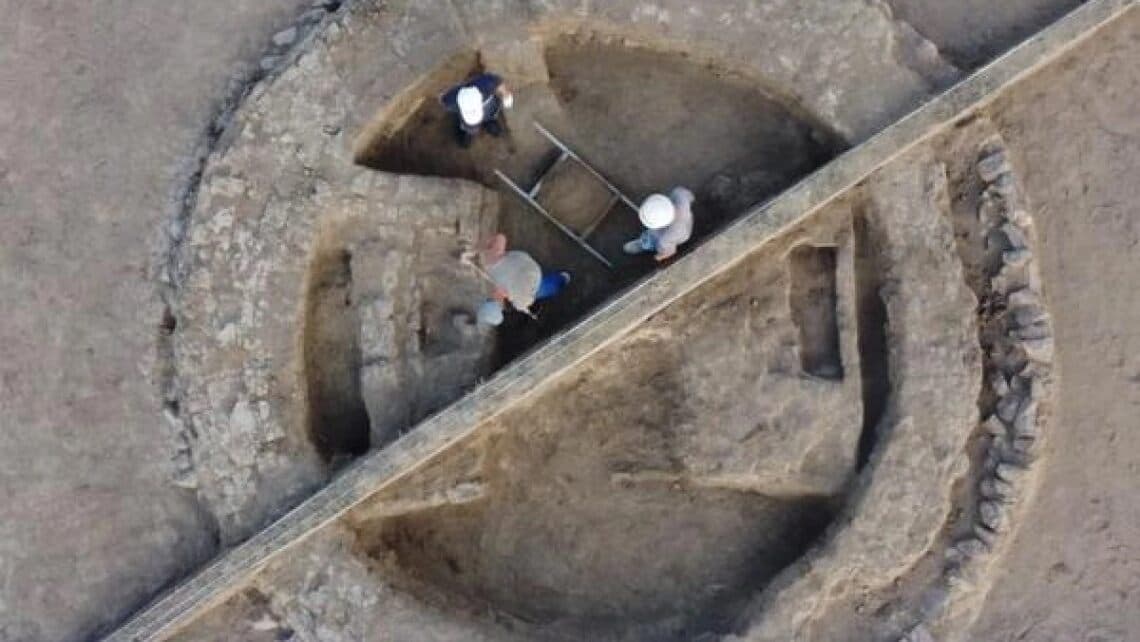
Е.An expedition of the Karaganda University named after E. A. Buketovas part of a research group together with such scientists as A. I. Kukushkin, E. A. Dmitriev, A. B. Maken,S. B. Iksanov, O. S. Shokhataev prepared a project of the Ministry of Science and Higher Education of the Republic of Kazakhstan "culture of the Saryark nomadic people in the Middle Ages (burial based on ritual materials)". complexes) " in 12 km from the village of Kainar (Nurinsky district, Karaganda region) orta of the Middleда Ages (XIII–XIV centuries) conducted an archaeological study of the developed monuments.
During the excavations, 3 buildings were covered, which are typical earth mounds for the Saryarka steppe, and brick mounds were also identified. As it turned out, the batch of raw materials was made in specially prepared pits near the objects. Two of the three objects were 4x5 m square fences, and the walls were oriented with slight deviations from the northwest to the southeast.
From an architectural point of view, the third round structure with a diameter of up to 7 m and a wall width of m etr caused the greatest excitementе. The base of the fence was reinforced with several rows of stones around the outer circle. In the westernpart of the wall, a special passagehas been created, a kind of imitation of a staircase going down it. In the internal space, a burial is organized without four inventoryitems. After the construction work was completed, the entire structure was covered with a mound of loose soil.
In the future, the camera processing of the obtained material and carrying out a natural-scientific analysis aimed at establishing the absolute age, reconstructing the graphic appearance of the buried, but at present, the objects studied belong to the time of the Golden Horde (XIII–XIV centuries), it is safe to say that this applies. The study of this historical period by archaeological methods is of great importance for the Central Kazakhstan region due to the small amount of written evidence and brings to the fore the study of multifaceted aspects of culture, in particular, in connection with the change in funerary traditions.